


With August wrapping up, we thought we’d take a quick reprieve from our summer break to catch you up on a month’s worth of delivery action. We’ve got a quarter billion fundraising round, a huge lawsuit targeting Amazon and some tasty data out of Europe. But more importantly, read to the end for our interview with Instacart’s Jamie Baron to get the inside scoop on the company’s buzzy new marketing initiative.
Today’s edition brought to you by Gridwise Analytics.
Today:
Amazon Hit with FTC Lawsuit
Owner.com Raises $240M
Chart Time | Not So Buenas Noches
Instacart & Chain’s Cart Classics
POLICY | FTC + 22 States Sue Amazon Over Deceptive Ad Practices
The Federal Trade Commission and 22 states have sued Amazon, alleging the ecommerce giant illegally and surreptitiously inflated the prices paid by advertisers on its platform. The suit alleges that Amazon inflated the cost paid by brands and sellers on its marketplace, primarily via the “second price” auctions for "Sponsored Products," "Sponsored Brands," and "Sponsored Display." The FTC says advertisers suffered at least $20 billion in losses, while states could seek civil penalties and attempt financial recoveries..
The Big Picture: The lawsuit alleges that the practice started around holidays, when advertisers may expect competition to drive up ad bid prices, but grew until the company intervened in auctions to raise the price 70-80% of the time. Amazon has published a response, claiming that consumers were not harmed by the practice. Amazon also claims that advertisers were not harmed, as CPC prices did not rise between 2019 and 2024, after adjusting for inflation. But one can easily imagine a scenario where falling ad prices are what prompted this initiative, which many of Amazon’s internal documents describe as “hidden,” in the first place.
PARTNER | Premium Rides Are Boosting Uber and Lyft. For How Long?

Premium rides have climbed to 20.1% of observed Uber trips and 8.8% of Lyft’s, up more than 40% on both platforms in two years. That shift is helping the platforms charge more and improve margins, but record driver pay could put those gains under pressure if consumers are less willing to pay more for rides.
Premium ride share grew 43.5% on Uber and 44.9% on Lyft over the past two years, reaching 20.1% and 8.8% of observed trips.
Median ride prices rose 10.3% on Uber and 7.1% on Lyft year over year.
Platform fees grew even faster, rising 14.0% on Uber and 26.4% on Lyft.
Driver gross pay per trip reached $15.78, up 7.6% year over year and surpassing its 2021 peak for the first time. Bonus pay rose 18.2%, while non-trip incentives jumped 56.2%.
Get the full data, including pricing, fees, premium mix, and driver pay across Uber and Lyft. Download it free → https://gridwise.io/analytics/inside-the-q2-2026-rideshare-economy
STARTUPS | Owner.com Raises $240M for Restaurant AI
Buzzy startup Owner.com just raised $240M at a $2.3 billion valuation, in a Series D round led by Growth Equity at Goldman Sachs Alternatives, with participation from Meritech, Redpoint, Headline and Jack Altman. In a very 2026-ey pitch, the company claims this latest round is all about making the company the “AI CMO and CTO for local businesses.” The six year old company does $100M in ARR, has been used by 100 million+ consumers and will facilitate over $1 billion in sales this year.

The Big Picture: Owner.com has quickly taken off in a crowded segment, positioning itself not just as a POS or ordering platform but as a broader set of marketing tools, while honing in on the SMB segment. The product includes a website and app builder, SEO tools, menus, reviews, upselling, and a comprehensive suite of direct ordering / delivery and loyalty tools. Expect the company to grow into related verticals like salons, spas and independent grocers shortly.
CHART TIME | Spaniards Start Dining Earlier

Say adiós to late dining… in a development that might be welcomed by every Glovo and Just Eat courier, Spaniards are giving up on their famous habit of eating ridiculously late dinners. Since the pandemic, the average dinner has shifted forward by about an hour. But while this may feel like the end of a historic tradition, Spain’s late night preferences evidently only date back to the WWII era.
INTERVIEW | Dissecting Instacart’s Chain Collab
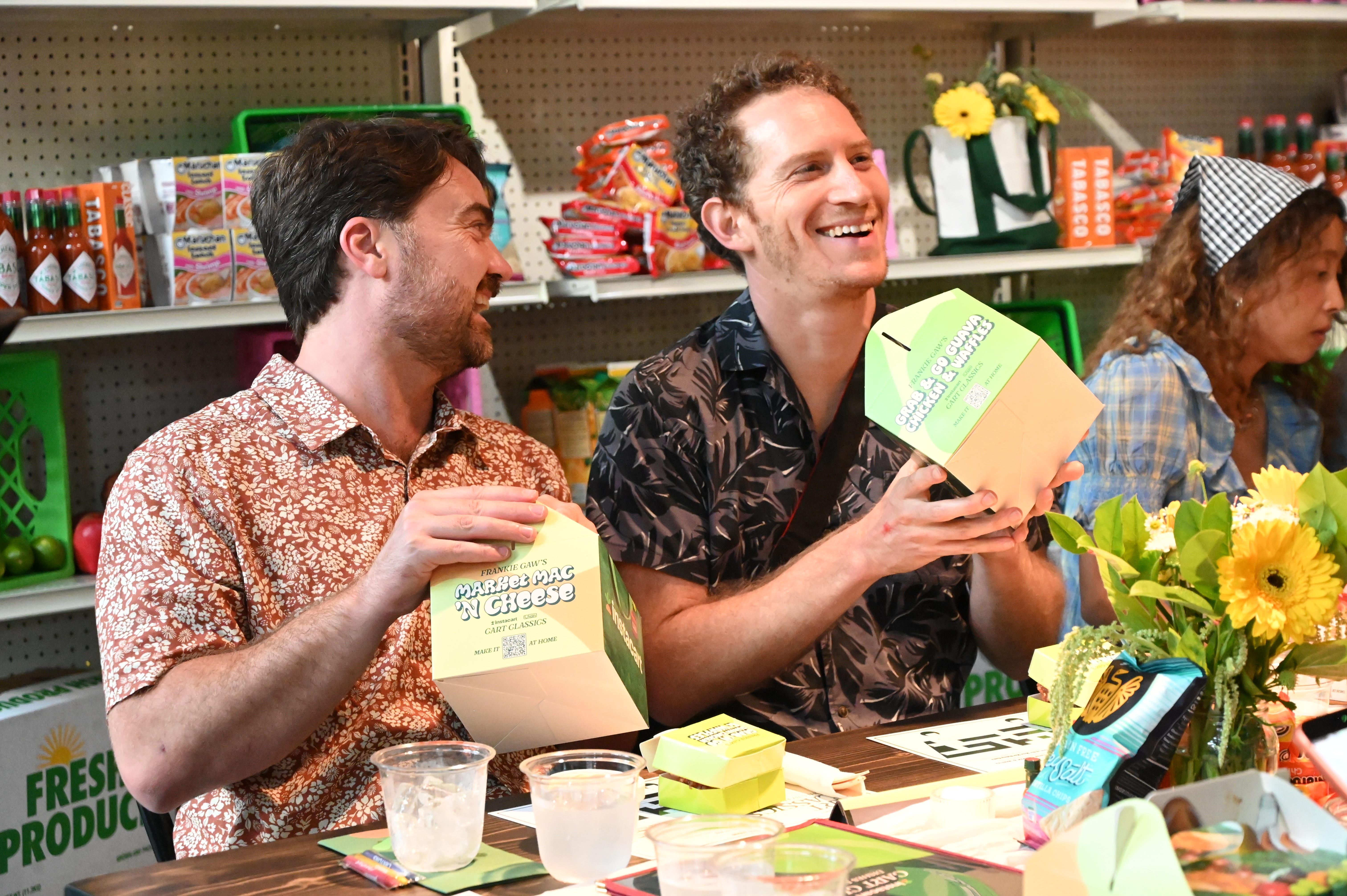
It was a hot summer evening, as a curious friend and I gathered at Chain’s Virgil Village studio. Founded by B.J. Novak in 2022, Chain quickly made a name for itself thanks to inventive food-focused pop-ups, collaborating with nostalgic names like Pizza Hut, Red Lobster and Jack in the Box. But this gathering was a bit different, as Chain had teamed up with Instacart, alongside Chef Frankie Gaw and a roster of CPG brands, to put together “Cart Classics” — a dinner party inside a faux grocery store, where the experience at the table seemed largely designed for later consumption on social media. Afterwards, I chatted with Jamie Baron, Director and Head of Instacart Ads Studio, to get all the details on the 3PD’s inventive marketing initiative.
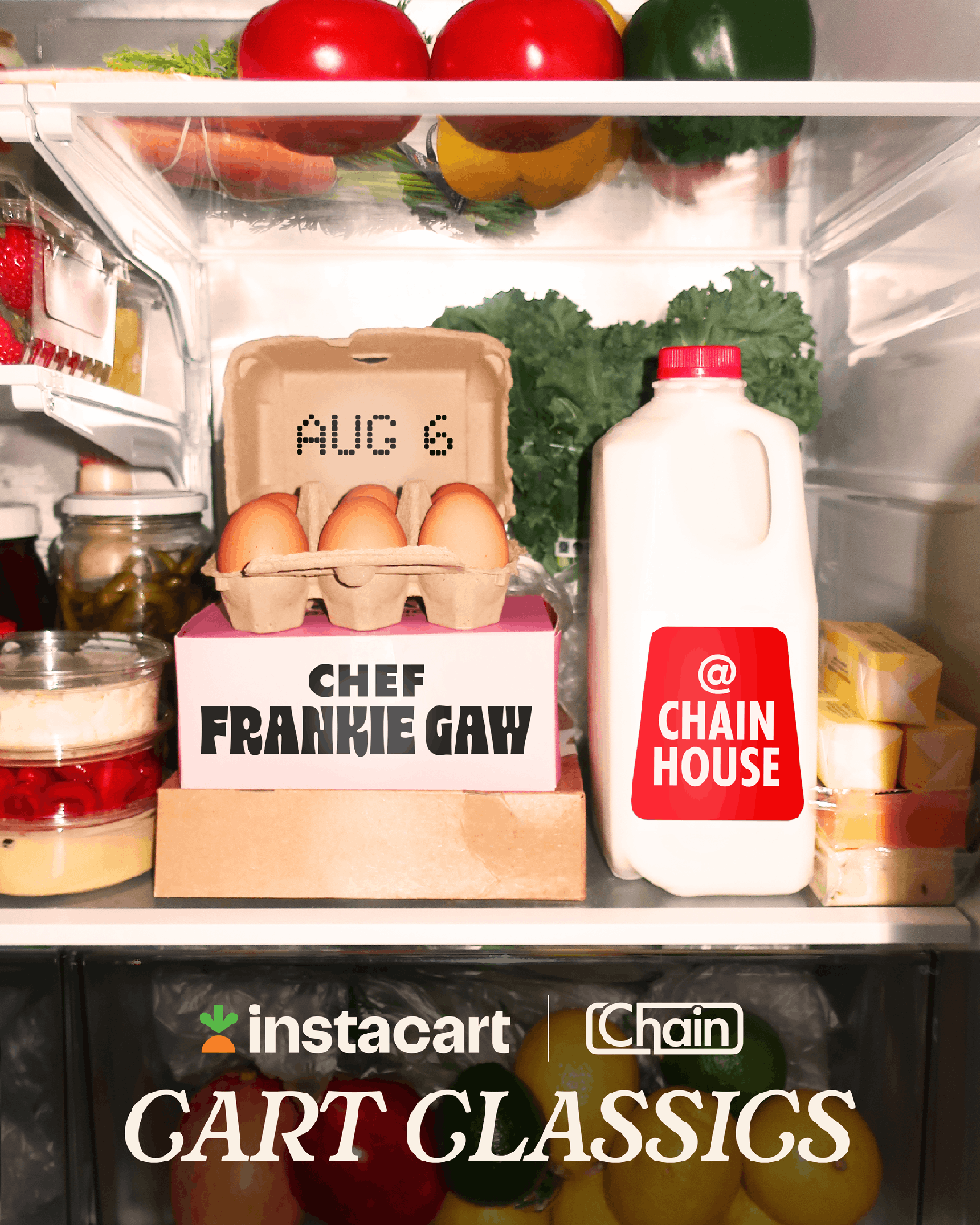
Jonah Bliss: Let’s start with the pitch, what was the vision for the “Instacart & Chain: Cart Classics” campaign?
Jamie Baron: As economic uncertainty weighs on everyday life, people are reaching for comfort and familiarity, turning to the dishes that transport them back to a childhood kitchen table. But at the same time, we live in a modern world where social media, inspiration from creators, and convenience are all incredibly important. Cart Classics was built at the intersection of that tension. We asked ourselves how we could bring people the nostalgia and comfort they are craving but with a modern twist.
We tapped Chef Frankie Gaw, whose “Turning American Classics Asian” series sits squarely at that intersection, to reimagine five iconic comfort dishes using everyday CPG staples. The result is a shoppable content engine that meets consumers exactly where they are: craving something that feels like home, discovering it on their feed, and adding it to their cart in one tap. All five recipes are now live on Instacart, amplified across social, in-app, and email. One pop-up dinner in LA turned into an ongoing cultural moment for grocery brands, with Instacart delivering these recipes to customers’ front doors in as fast as an hour.
How did something like this come together? Who came up with the initial idea — Instacart, Chain, Chef Frankie Gaw?
It was collaborative. Chain, co-founded by B.J. Novak and award-winning chef Tim Hollingsworth, knows how to build a pop-up food experience better than anyone. Their relationships with talented chefs and deep network of culinary tastemakers and creators were something we couldn’t replicate on our own. On our end, the big question was: who’s the right chef and which CPGs would be a natural fit? Once Chain recommended Frankie and we saw his modern takes on culinary classics, we knew he was the right choice. Once Frankie was in, the concept locked: reimagine iconic comfort food using everyday CPG staples, make it feel elevated and a little unexpected, and make every recipe shoppable. We brought the new opportunity to our CPG partners and quickly engaged Belgian Boys, Maruchan, Siete, and Tabasco – they each came on for different reasons, but were excited about authentically incorporating their brands into this first-of-its-kind pop-up for Instacart.


Who was the campaign ultimately for: the people attending the dinner, Instacart shoppers that might see it all happen on social, or the CPG partners in your ecosystem? What behavior were you trying to impact?
The goal of this campaign was ultimately to make these recipes accessible for as many people as possible. We know that consumers are busy, so we thought about how we could bring them inspiration, fun and engaging content, easy to follow recipes, and the convenience of delivery all in one. The dinner served as a launch moment, with creators and VIPs sharing their experience with their followers. This was followed by social content from Chef Frankie and Instacart, in-app features, and emails straight to user’s inboxes. Our goal was to serve up inspiration from an amazing social-forward chef, but instead of just watching the content, we wanted to make people feel like it was possible to recreate at home with items they can easily find in a grocery store. The goal was to make the gap between “that looks amazing” and “I’m actually making it tonight” basically disappear. And for our CPG partners, this was a chance to show up somewhere completely new. We’re taking grocery staples people already know and love and putting them in an unexpected context. That’s an exciting story for a brand like Belgian Boys or Maruchan to tell.
This event brought together some interesting CPG brands — household names like Tabasco and up and comers like Belgian Boys — how did you get them involved?
We let the concept do most of the selling. The brief was clear: nostalgic comfort food, modern culinary take, unexpected ingredient pairings. From there it was about finding brands that could tell an authentic story inside that frame and then we actually asked them what they were excited about rather than just assigning them a slot.
Maruchan, for instance, loves to tap into the foodie space, while Belgian Boys is a newer brand eager to find ways to reach consumers beyond their usual audience of parents. This was a real chance for them to show up in social and experiential in a bigger way. Instacart Ads Studio works with over 9,000 CPG brands, so creating moments where an emerging brand can stand next to a household name and hold its own is something we’re built to do.
From a logistical level — how long did it take to put something like this together, and what the scale of investment was like?
Less than three months, start to finish. A small but mighty cross functional team at Instacart that includes experts across events, social, influencer, CPG partnerships, and creative jumped in to work hand in hand with Chain to bring the physical dinner to life, and that partnership is really what made the pace possible. The oversized Instacart bag you walked through at the entrance, the grocery cart food delivery, the checkout belt dividers on the tables, the CPG brand gallery hallway. It all came together at a level of detail that made the whole night feel completely immersive. You don’t get there without a partner like Chain, who has deep pop-up expertise, and an internal team that knows how to execute flawlessly.
What we brought on the Instacart Ads Studio side was the CPG relationships, the ability to make every recipe shoppable across more than 2,200 retail banners and nearly 100,000 stores, and the marketing muscle to turn a one-night event into something that keeps running. In-app placements, social, CRM. That’s how a single dinner in LA becomes a program people engage with for weeks.
How do you measure success; what was the ROI for this activation?
We’re still learning – this is a newer space for us and I don’t want to pretend we have it all figured out. But the early signals are hard to ignore. The Cart Classics invite sold out in six minutes, which tells us that there’s a real appetite for events like this. The recipes are now live across the Instacart app and getting amplified over the coming weeks. Every attendee went home with a bag full of ingredients from our CPG partners so they could actually make the dishes and share that with their own followers. So the night itself was never really the end point. It was the kickoff. At its core, this is about bringing inspiration and commerce together, and what we’ve seen so far has been a success.
Any other interesting marketing campaigns that we can expect to see a bit further down the aisle?
We’re not done. Cart Classics was really a proof of concept. What happens when Instacart Ads Studio brings our CPG relationships, our shoppable platform, and the right creative partners together around something culturally relevant. The answer, it turns out, is something people actually want to be part of. The idea that you can discover a recipe from a creator you trust and have the ingredients on your doorstep in under an hour is new. There’s a lot of road ahead.
A Few Good Links (& Stories You May Have Missed at The Curbivore)
Walmart exec talks restaurant delivery push. McDonald’s profit climbs 5%. Google Maps gets back into food ordering. Modern Delivery named top ecommerce newsletter. Amazon Prime Air expands to 500 towns. UE & DD push $12 meal deals. Walmart revenue rises 5.9%, as stock falls and Flipkart grows. Amazon developing AI-powered warehouses. DoorDash finds catering helps with RTO. Chicago Teamsters push Delivery Protection Act. SNAP budgets to swing wildly based on statistical flukes. Uber publishes Delivery Hero offer. Blank Street Coffee raises $75M. Uber Eats adds AI tools for restaurateurs. Which restaurants are still bullish about dark kitchens? Walmart building high-tech DC in GA. Fintecher Bolt raising $27M. Deliveroo partners with Robert Dyas and Cressi. Delivery Hero Q2 GMV up 11.3%. Gatik raises $200M. Gopuff expands private label offerings. Restaurant owners troubled by inflation and hiring. Lyft deepens American Airlines credit card partnership. Talabat raises full year guidance. Walmart debuts rotisserie chicken purse. Zipline partners with Uber.
Got a tip, feedback, or just want to say hi? Reply back to this email.
— Brought to you by the Curbivore Crew.